
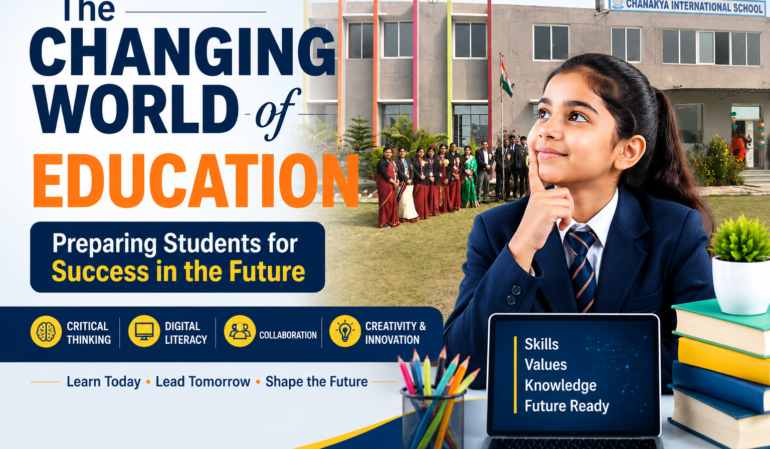
Introduction: The Changing World of Education
Education has always been the foundation of progress, innovation, and personal growth. However, the world our children are preparing to enter today is dramatically different from the one their parents experienced. Rapid technological advancements, artificial intelligence, globalization, digital transformation, and evolving workplace demands are reshaping how students learn, think, and prepare for the future.
Traditional education systems were primarily designed to equip students with academic knowledge and subject expertise. While these remain important, modern education now extends beyond textbooks, examinations, and classroom instruction. Schools are increasingly focused on developing critical thinking, creativity, collaboration, communication, adaptability, leadership, and digital literacy—skills that are essential for success in the twenty-first century.
As we move further into an era defined by innovation and technological disruption, schools play a crucial role in helping students become confident, responsible, and future-ready individuals. At City International School, Gauriganj, we recognize that education must evolve continuously to meet the needs of a changing world while preserving the core values of integrity, discipline, empathy, and lifelong learning.
This transformation presents exciting opportunities for students, parents, educators, and communities alike.
Why Education Is Changing Faster Than Ever Before
The pace of change in today’s world is unprecedented. New technologies emerge almost daily, industries evolve rapidly, and many careers that today’s students will pursue have not yet been created.
Several factors are driving this educational transformation:
1. Technological Innovation
Technology has become an integral part of everyday life. From smartphones and cloud computing to artificial intelligence and virtual learning environments, digital tools are transforming how information is accessed and shared.
Students today have access to vast amounts of information instantly. Therefore, education is no longer solely about memorizing facts. Instead, students must learn how to analyze, evaluate, and apply information effectively.
2. Artificial Intelligence and Automation
Artificial intelligence is becoming increasingly influential in education and workplaces. Schools worldwide are integrating AI awareness, digital literacy, and technology-based learning into their curricula to help students understand and responsibly use emerging technologies.
The future workforce will require individuals who can work alongside technology while utilizing uniquely human abilities such as creativity, emotional intelligence, ethical reasoning, and problem-solving.
3. Global Connectivity
The internet has connected people across countries and cultures like never before. Students now interact with global perspectives, international opportunities, and diverse ideas.
Modern education encourages students to develop global awareness, cultural understanding, and effective communication skills to thrive in an interconnected world.
4. Changing Career Requirements
Employers increasingly value practical skills alongside academic qualifications. Adaptability, teamwork, leadership, communication, and critical thinking are often considered as important as technical expertise.
Schools must therefore prepare students not only for examinations but also for real-world challenges and opportunities.
Moving Beyond Traditional Learning
For many years, education focused heavily on rote memorization and standardized testing. While foundational knowledge remains important, modern educational approaches emphasize deeper understanding and practical application.
Today’s students benefit most when they are encouraged to:
- Ask meaningful questions
- Explore ideas independently
- Solve real-world problems
- Participate actively in learning
- Collaborate with peers
- Apply knowledge creatively
This shift helps students develop confidence, curiosity, and a lifelong passion for learning.
When students understand concepts rather than simply memorizing information, they become better equipped to adapt to changing circumstances and solve complex challenges.
The Rise of Student-Centered Learning
Modern classrooms increasingly place students at the center of the learning process.
Rather than relying solely on lectures, teachers now facilitate learning experiences that encourage participation, discussion, exploration, and collaboration.
Student-centered learning allows learners to:
Develop Independence
Students take greater responsibility for their learning journey, helping them become self-motivated and accountable.
Build Confidence
Active participation encourages students to express ideas, ask questions, and engage in meaningful discussions.
Enhance Problem-Solving Skills
Students learn how to evaluate information, consider multiple perspectives, and develop innovative solutions.
Improve Engagement
Interactive learning experiences increase motivation and deepen understanding.
By fostering active involvement, schools help students become lifelong learners who continue growing beyond the classroom.
The Importance of Digital Literacy
In today’s digital age, technological skills are essential.
Digital literacy extends beyond knowing how to use devices. It includes understanding how technology works, evaluating online information, maintaining cybersecurity awareness, and using digital tools responsibly.
Students must learn:
- Online research skills
- Digital communication
- Responsible social media usage
- Cyber safety practices
- Ethical technology use
- Information evaluation and verification
These competencies help students navigate the digital world safely and effectively.
Digital literacy is becoming as fundamental as reading, writing, and mathematics.
Critical Thinking: A Skill for Life
Information is abundant in today’s world. The ability to think critically is therefore more important than ever.
Critical thinking involves:
- Analyzing information objectively
- Identifying reliable sources
- Evaluating evidence
- Recognizing biases
- Making informed decisions
Students who develop strong critical-thinking skills are better prepared to handle academic challenges, workplace responsibilities, and everyday decision-making.
Schools play a vital role in nurturing this ability through inquiry-based learning, discussions, projects, and problem-solving activities.
Communication Skills in the Modern World
Effective communication remains one of the most valuable life skills.
Whether speaking in public, participating in group discussions, writing reports, or collaborating online, students must learn how to communicate clearly and confidently.
Strong communication skills help students:
- Express ideas effectively
- Build relationships
- Work collaboratively
- Demonstrate leadership
- Succeed academically and professionally
Schools can foster communication through presentations, debates, group projects, creative writing, and extracurricular activities.
Creativity and Innovation: Driving Future Success
Innovation is transforming industries around the globe.
Creativity is no longer limited to artistic fields. It is essential in science, technology, business, engineering, healthcare, and entrepreneurship.
Creative thinkers:
- Generate new ideas
- Adapt to challenges
- Explore alternative solutions
- Drive innovation
Schools that encourage creativity help students develop confidence, imagination, and problem-solving abilities.
Activities such as project-based learning, STEM education, arts programs, competitions, and innovation challenges provide valuable opportunities for creative development.
The Growing Importance of STEM Education
Science, Technology, Engineering, and Mathematics (STEM) education is increasingly important in today’s world.
STEM learning helps students:
- Understand scientific concepts
- Develop analytical skills
- Apply knowledge practically
- Explore emerging technologies
- Prepare for future careers
Hands-on experimentation, robotics, coding, engineering projects, and scientific inquiry foster curiosity and innovation.
However, effective education balances STEM learning with humanities, arts, languages, and social sciences to ensure holistic development.
The Role of Emotional Intelligence
Academic excellence alone does not guarantee success.
Emotional intelligence helps students understand and manage emotions while building positive relationships with others.
Key components include:
- Self-awareness
- Empathy
- Resilience
- Self-regulation
- Social skills
Students with strong emotional intelligence often demonstrate improved academic performance, stronger relationships, and greater personal well-being.
Schools can nurture emotional intelligence through supportive environments, mentoring, teamwork, leadership opportunities, and social-emotional learning programs.
Building Resilience in Students
The future will undoubtedly present challenges and uncertainties.
Resilience enables students to:
- Overcome setbacks
- Learn from mistakes
- Adapt to change
- Maintain motivation
- Develop perseverance
Rather than fearing failure, resilient students view challenges as opportunities for growth.
Encouraging a growth mindset helps learners understand that abilities can be developed through effort, practice, and persistence.
The Value of Experiential Learning
Learning becomes more meaningful when students connect knowledge with real-world experiences.
Experiential learning includes:
- Field trips
- Science experiments
- Community service
- Internships
- Project-based learning
- Leadership activities
These experiences allow students to apply classroom concepts in practical situations.
Experiential learning enhances engagement, understanding, and long-term retention of knowledge.
Preparing Students for Careers That Do Not Yet Exist
One of the most fascinating aspects of modern education is preparing students for careers that may not currently exist.
Technological innovation continues creating entirely new industries and professions.
Future-ready students must develop:
- Adaptability
- Curiosity
- Creativity
- Digital competence
- Lifelong learning habits
Rather than focusing solely on specific job roles, education should equip students with transferable skills that remain valuable across changing career landscapes.
The Partnership Between Schools and Parents
Student success depends on strong collaboration between schools and families.
Parents play a critical role by:
- Encouraging learning at home
- Supporting healthy habits
- Promoting reading
- Monitoring digital activity
- Maintaining communication with educators
When schools and parents work together, students benefit from consistent guidance, encouragement, and support.
This partnership creates an environment where children can thrive academically, socially, and emotionally.
How City International School, Gauriganj Is Preparing Future-Ready Learners
At City International School, Gauriganj, education extends beyond academic achievement.
Our commitment focuses on nurturing well-rounded individuals who are prepared to meet the challenges and opportunities of the future.
We strive to:
- Promote academic excellence
- Encourage critical thinking
- Foster creativity and innovation
- Develop leadership qualities
- Strengthen communication skills
- Support emotional well-being
- Integrate technology responsibly
- Cultivate ethical values and character
By combining strong educational foundations with future-focused learning experiences, we empower students to become confident, capable, and responsible citizens.
Conclusion: Education for a Better Tomorrow
The world is changing rapidly, and education must evolve alongside it.
The goal of modern education is no longer simply to prepare students for examinations. It is to prepare them for life.
Students need knowledge, but they also need adaptability, creativity, resilience, communication skills, digital literacy, and emotional intelligence.
As educators, parents, and communities, we share the responsibility of helping young learners navigate a complex and exciting future.
By embracing innovation while preserving timeless values, we can ensure that today’s students become tomorrow’s leaders, innovators, problem-solvers, and changemakers.
The changing world of education presents tremendous opportunities, and together, we can prepare every child for a future filled with possibility, purpose, and success.