
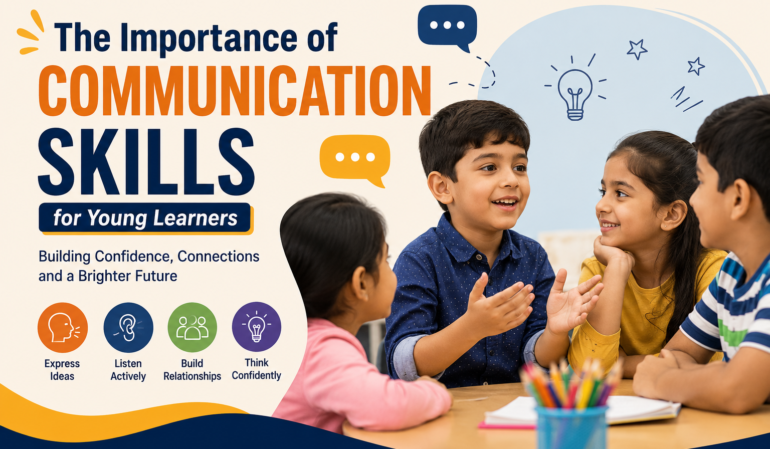
The Importance of Communication Skills for Young Learners
Communication is one of the most valuable life skills a child can develop. From expressing thoughts and emotions to building friendships and achieving academic success, effective communication forms the foundation of a child’s overall growth. In today’s interconnected world, where collaboration, creativity, and confidence are highly valued, strong communication skills have become more important than ever.
Children begin communicating from infancy through gestures, expressions, and sounds. As they grow, they learn to speak, listen, read, and write, gradually developing the ability to share ideas, understand others, and solve problems. These skills not only support classroom learning but also prepare students to become responsible citizens, compassionate individuals, and successful professionals in the future.
At Children’s International School, Gauriganj (CIS Gauriganj), communication is viewed as much more than speaking fluently. It is about nurturing confident learners who can express themselves respectfully, think critically, collaborate effectively, and adapt to different situations. Through interactive classrooms, co-curricular activities, group discussions, presentations, and a supportive learning environment, the school encourages every child to find their voice and communicate with confidence.
This article explores why communication skills are essential for young learners, how they influence academic and personal development, the role of parents and teachers in fostering these abilities, and practical ways children can become effective communicators from an early age.
Why Communication Skills Matter in Early Childhood
Early childhood is a critical period for language development and social learning. During these formative years, children absorb information rapidly and begin building the habits that shape their personalities and future success.
Communication skills help children:
- Express their thoughts and feelings clearly.
- Build meaningful friendships.
- Understand classroom instructions.
- Ask questions confidently.
- Participate actively in learning activities.
- Resolve conflicts peacefully.
- Develop emotional intelligence.
- Strengthen critical thinking abilities.
Children who communicate effectively often feel more confident participating in classroom discussions and extracurricular activities. They are better equipped to work in teams, present ideas, and interact positively with teachers and peers.
Strong communication also reduces misunderstandings and helps children manage emotions more effectively. Instead of feeling frustrated or withdrawn, they learn to explain their needs, seek help when necessary, and build healthy relationships.
Communication Is More Than Speaking
Many people believe communication simply means talking. In reality, communication is a combination of several interconnected skills that children gradually develop over time.
Listening Skills
Listening is one of the most important aspects of communication. Children who listen carefully understand instructions better, respond thoughtfully, and develop stronger relationships.
Active listening includes:
- Paying attention without distractions.
- Understanding the speaker’s message.
- Asking relevant questions.
- Responding respectfully.
- Remembering important information.
Effective listeners become better learners because they absorb knowledge more efficiently and participate meaningfully in classroom discussions.
Speaking Skills
Speaking enables children to express ideas, share experiences, ask questions, and participate confidently.
Strong speaking skills involve:
- Clear pronunciation.
- Appropriate vocabulary.
- Organized thinking.
- Confidence.
- Respectful tone.
- Eye contact.
Schools encourage speaking through storytelling, debates, classroom discussions, role-playing, presentations, and public speaking opportunities.
Reading Skills
Reading strengthens vocabulary, imagination, comprehension, and overall communication ability.
Children who read regularly:
- Learn new words.
- Improve sentence structure.
- Understand different viewpoints.
- Develop creativity.
- Enhance writing abilities.
Reading also introduces children to diverse cultures, ideas, and experiences, broadening their understanding of the world.
Writing Skills
Writing allows children to organize their thoughts logically and communicate effectively in both academic and real-life situations.
Writing develops:
- Creativity.
- Grammar.
- Vocabulary.
- Logical thinking.
- Problem-solving.
- Confidence.
Whether writing essays, journals, stories, or emails, students benefit greatly from practicing written communication from an early age.
Non-Verbal Communication
Communication also includes body language, facial expressions, gestures, posture, and eye contact.
Children who understand non-verbal communication become more aware of how their actions influence others.
Examples include:
- Smiling while greeting someone.
- Maintaining eye contact during conversations.
- Using positive body language.
- Respecting personal space.
- Demonstrating empathy through expressions.
Teaching children these subtle yet powerful communication skills improves social interactions significantly.
The Connection Between Communication and Academic Success
Communication skills directly influence classroom performance.
Students who communicate effectively tend to:
- Understand lessons more clearly.
- Ask questions without hesitation.
- Participate actively.
- Complete group projects successfully.
- Deliver better presentations.
- Write more effectively.
- Perform confidently during assessments.
When children hesitate to communicate, they may struggle even if they understand the subject. Encouraging open conversations creates an environment where curiosity and learning flourish.
Teachers also find it easier to identify learning gaps when students communicate openly about their challenges.
Building Confidence Through Communication
Confidence grows when children feel heard, respected, and encouraged.
Every time a child answers a question, tells a story, participates in an activity, or presents in front of classmates, they gain valuable confidence.
Confident communicators are more likely to:
- Take initiative.
- Participate in competitions.
- Lead group activities.
- Express opinions respectfully.
- Handle challenges calmly.
- Build leadership qualities.
Schools play a significant role in providing safe spaces where children can practice communication without fear of making mistakes.
Positive reinforcement from teachers and parents motivates children to keep improving.
Communication Skills Foster Strong Friendships
Friendships are built on communication.
Children who communicate openly are better able to:
- Introduce themselves.
- Share ideas.
- Solve disagreements.
- Understand others’ feelings.
- Offer support.
- Work together.
These social skills contribute to emotional well-being and create a positive school environment where every child feels included.
Learning to communicate respectfully also reduces bullying and encourages kindness, empathy, and cooperation among students.
Developing Emotional Intelligence Through Communication
Communication and emotional intelligence go hand in hand.
Emotionally intelligent children recognize, understand, and manage their emotions while respecting the feelings of others.
When children learn to express emotions such as happiness, sadness, excitement, or frustration using words rather than negative behavior, they become better equipped to navigate life’s challenges.
Teachers and parents can support emotional communication by:
- Encouraging honest conversations.
- Listening without judgment.
- Helping children name their emotions.
- Teaching empathy.
- Modeling respectful dialogue.
These practices create emotionally resilient children who are prepared to handle both success and setbacks with maturity.
Communication Skills Prepare Students for Future Careers
The workplace of the future values communication just as highly as technical knowledge.
Regardless of whether students aspire to become doctors, engineers, teachers, entrepreneurs, scientists, artists, or public servants, they will need to communicate effectively with colleagues, clients, and communities.
Future-ready communication includes:
- Public speaking.
- Team collaboration.
- Problem-solving discussions.
- Professional writing.
- Digital communication.
- Leadership conversations.
- Cross-cultural understanding.
By nurturing these abilities from an early age, schools help students build a strong foundation for lifelong success.
The Role of Schools in Developing Communication Skills
Schools are one of the most influential environments for communication development because children spend a significant portion of their day interacting with teachers and peers.
At Children’s International School, Gauriganj (CIS Gauriganj), communication is integrated into everyday learning experiences. Students are encouraged to participate in classroom discussions, ask thoughtful questions, collaborate on projects, present their ideas, and engage in activities that build confidence and interpersonal skills. Such an environment helps learners develop not only academic knowledge but also the ability to express themselves clearly, listen actively, and work effectively with others.
An engaging school culture nurtures communication through:
- Interactive teaching methods that encourage dialogue rather than one-way instruction.
- Group activities and collaborative projects that promote teamwork.
- Storytelling, debates, and presentations that strengthen public speaking.
- Reading and writing exercises that expand vocabulary and critical thinking.
- Cultural programs, assemblies, and competitions that provide opportunities to communicate with larger audiences.
When children are given regular opportunities to share their ideas in a supportive setting, communication becomes a natural part of their learning journey rather than a skill reserved for special occasions.
The Role of Parents in Building Strong Communication Skills
While schools provide structured opportunities for communication, parents are a child’s first teachers. The conversations children have at home shape their language, confidence, and ability to express themselves. Every interaction—whether during meals, playtime, or bedtime stories—helps children develop the communication habits they will carry throughout life.
A supportive home environment encourages children to speak freely, ask questions, and share their thoughts without fear of criticism. When parents listen patiently and respond thoughtfully, children learn that their opinions matter. This sense of trust lays the foundation for confident communication.
Here are some practical ways parents can nurture communication skills at home:
1. Engage in Meaningful Conversations
Set aside time every day to talk with your child about school, friends, hobbies, and daily experiences. Instead of asking questions that can be answered with a simple “yes” or “no,” encourage detailed responses.
For example, instead of asking:
“Did you enjoy school today?”
Ask:
- “What was the most interesting thing you learned today?”
- “Who did you help today?”
- “What made you smile during school?”
- “What would you like to learn more about tomorrow?”
These open-ended questions inspire children to think, reflect, and communicate more effectively.
2. Be an Active Listener
Listening is just as important as speaking. When children know they are being heard, they become more willing to express themselves.
Parents can practice active listening by:
- Maintaining eye contact.
- Avoiding interruptions.
- Showing genuine interest.
- Asking follow-up questions.
- Appreciating the child’s efforts to communicate.
Active listening also teaches children to respect others when they speak.
3. Encourage Reading Together
Reading is one of the most effective ways to improve communication skills. Storybooks introduce children to new vocabulary, sentence structures, emotions, and ideas.
After reading a story, parents can ask questions such as:
- Who was your favorite character?
- Why did the character make that decision?
- What would you have done differently?
- Can you tell the story in your own words?
These discussions strengthen both comprehension and verbal expression.
4. Limit Passive Screen Time
Digital devices have become an important part of children’s lives, but excessive screen time can reduce opportunities for face-to-face interaction.
Parents should encourage activities that promote conversation, such as:
- Family board games
- Outdoor play
- Creative storytelling
- Cooking together
- Gardening
- Art and craft projects
These shared experiences naturally create opportunities for communication and collaboration.
5. Appreciate Every Effort
Children gain confidence when their efforts are recognized. Rather than focusing only on perfect grammar or pronunciation, parents should celebrate their willingness to communicate.
Simple words of encouragement such as:
- “That was a wonderful idea.”
- “I’m proud of how clearly you explained that.”
- “Thank you for sharing your thoughts.”
can make a lasting impact on a child’s confidence.
Activities That Improve Communication Skills in Young Learners
Communication develops through practice. The more opportunities children have to interact with others, the stronger their communication skills become.
Here are some engaging activities that schools and parents can use.
Storytelling Sessions
Storytelling encourages imagination, vocabulary development, and confidence.
Children can:
- Narrate personal experiences.
- Create fictional stories.
- Retell stories from books.
- Describe pictures.
- Complete unfinished stories.
Storytelling also improves sequencing, memory, and creative thinking.
Role-Playing Activities
Pretend play allows children to practice communication in real-life situations.
Examples include:
- Visiting a doctor
- Shopping at a store
- Conducting a classroom interview
- Ordering food at a restaurant
- Acting as a teacher or scientist
Role-playing develops vocabulary, empathy, confidence, and problem-solving skills.
Group Discussions
Group discussions encourage respectful communication and teamwork.
Students learn to:
- Listen carefully.
- Wait for their turn.
- Respect different opinions.
- Present ideas clearly.
- Build confidence in expressing viewpoints.
These experiences prepare students for collaborative learning throughout their academic journey.
Public Speaking Opportunities
Public speaking is one of the most effective confidence-building activities.
Schools can organize:
- Morning assemblies
- Speech competitions
- Poetry recitations
- Debate competitions
- Show-and-tell activities
- Classroom presentations
Initially, some children may feel nervous, but regular practice gradually builds confidence and fluency.
Creative Writing
Writing encourages children to organize their thoughts before expressing them.
Creative writing activities include:
- Journaling
- Essay writing
- Letter writing
- Story creation
- Poetry writing
- Newspaper articles
Writing also strengthens grammar, vocabulary, and logical thinking.
Reading Aloud
Reading aloud improves:
- Pronunciation
- Fluency
- Confidence
- Expression
- Vocabulary
Teachers can encourage students to read stories aloud in class while parents can make reading a daily family activity at home.
The Impact of Technology on Children’s Communication
Technology has transformed the way children communicate. Digital learning platforms, educational apps, online classrooms, and virtual collaboration tools have opened new opportunities for learning and interaction.
When used wisely, technology can support communication by:
- Expanding vocabulary through educational content.
- Encouraging collaborative online projects.
- Improving digital literacy.
- Connecting students with learners from different cultures.
- Enhancing presentation skills through multimedia tools.
However, excessive reliance on digital communication may reduce meaningful face-to-face conversations. Children who spend long hours on screens may have fewer opportunities to practice active listening, interpret body language, or engage in spontaneous discussions.
The key is maintaining a healthy balance. Technology should complement—not replace—real-life interactions. Schools and parents can work together to ensure that children benefit from digital resources while continuing to develop strong interpersonal communication skills.
Communication Skills and Leadership Development
Many leadership qualities begin with effective communication.
Young leaders are able to:
- Inspire others.
- Share ideas confidently.
- Resolve conflicts.
- Make thoughtful decisions.
- Collaborate effectively.
- Build trust within teams.
Leadership opportunities in schools—such as serving as class monitors, leading group projects, participating in student councils, or organizing events—allow students to practice these essential communication skills in meaningful ways.
By encouraging children to take responsibility and communicate respectfully, schools help nurture future leaders who are confident, compassionate, and capable of making a positive difference.
Overcoming Common Communication Challenges
Every child develops communication skills at their own pace. Some children are naturally talkative, while others may be shy or hesitant. Recognizing these differences is essential for providing the right support.
Common challenges include:
Fear of Speaking in Public
Many children feel nervous when speaking before a group. Gradual exposure through small presentations, storytelling, and classroom participation helps build confidence over time.
Limited Vocabulary
A restricted vocabulary can make it difficult for children to express themselves. Regular reading, engaging conversations, and introducing new words in everyday contexts can significantly improve language development.
Poor Listening Habits
Children may become distracted or interrupt others during conversations. Teaching active listening through games, discussions, and role-modeling helps them become more attentive and respectful communicators.
Language Barriers
In multilingual environments, some children may need additional support as they learn new languages. Encouragement, patience, and consistent practice enable them to gain confidence without feeling overwhelmed.
Lack of Self-Confidence
Some children hesitate to share their ideas because they fear making mistakes. Positive reinforcement, constructive feedback, and a safe learning environment help them overcome this hesitation and develop self-assurance.
Creating a Communication-Friendly Learning Environment
An environment that values open communication encourages children to participate, ask questions, and explore new ideas without fear of judgment.
Teachers can foster such an environment by:
- Encouraging curiosity and inquiry.
- Respecting every student’s opinion.
- Celebrating diversity in thought and expression.
- Providing equal opportunities for participation.
- Using collaborative learning techniques.
- Offering constructive and encouraging feedback.
Similarly, parents can reinforce these values at home by creating spaces where children feel comfortable discussing their experiences, concerns, and aspirations.
When schools and families work together to promote open communication, children develop not only strong language skills but also confidence, empathy, resilience, and a lifelong love for learning.
Communication Skills in the 21st Century: Preparing Children for a Changing World
The world is evolving rapidly. Advances in technology, globalization, and changing workplace expectations mean that today’s students need more than academic excellence to succeed. They need to communicate effectively across cultures, collaborate with diverse teams, solve complex problems, and adapt to new situations with confidence.
In the 21st century, communication extends beyond face-to-face conversations. Students are expected to present ideas through digital platforms, participate in virtual discussions, write professional emails, create multimedia presentations, and engage responsibly on online platforms. These modern forms of communication require clarity, critical thinking, empathy, and digital awareness.
Developing communication skills from an early age prepares children to:
- Adapt to changing educational and professional environments.
- Build meaningful relationships in both physical and digital spaces.
- Express ideas confidently during interviews, presentations, and collaborative projects.
- Think critically before sharing opinions or information.
- Respect diverse perspectives and communicate with empathy.
As education continues to evolve, communication remains one of the most valuable life skills that every student can possess.
How Children’s International School, Gauriganj Nurtures Effective Communicators
At Children’s International School, Gauriganj (CIS Gauriganj), education goes beyond textbooks. The school believes that every child has a unique voice, and creating opportunities to develop that voice is an essential part of holistic education.
The learning environment encourages students to communicate confidently, think independently, and participate actively in classroom and co-curricular activities. Teachers focus on creating interactive lessons where students are encouraged to ask questions, share ideas, and collaborate with their peers.
Communication skills are strengthened through a variety of learning experiences, including:
Interactive Classroom Learning
Students actively participate in discussions rather than simply listening to lectures. This approach develops confidence, curiosity, and critical thinking.
Public Speaking Opportunities
Morning assemblies, classroom presentations, speech competitions, and cultural events provide students with regular opportunities to speak before an audience and build self-confidence.
Collaborative Learning
Group projects and team-based activities help students learn how to communicate respectfully, share responsibilities, and appreciate different perspectives.
Reading and Literary Activities
Regular reading sessions, storytelling, library programs, and creative writing activities enhance vocabulary, comprehension, and expressive abilities.
Co-Curricular Participation
Music, drama, debates, quizzes, sports, and cultural celebrations encourage students to interact with others, solve problems collaboratively, and develop leadership skills through communication.
By integrating communication into every aspect of learning, Children’s International School, Gauriganj helps students become confident learners who are well-prepared for future academic and personal success.
Practical Tips for Students to Improve Communication Skills Every Day
Developing communication skills does not happen overnight. It is a continuous process that improves with consistent practice. Students can strengthen their communication abilities by adopting a few simple daily habits.
Read Every Day
Reading books, newspapers, magazines, and age-appropriate articles introduces new vocabulary and improves comprehension.
Practice Speaking Clearly
Students should express their ideas confidently during classroom discussions, family conversations, and group activities. Speaking regularly helps improve fluency and confidence.
Listen Before Responding
Good communication begins with good listening. Paying attention to others and responding thoughtfully leads to meaningful conversations.
Ask Questions
Curiosity is an important part of learning. Asking questions demonstrates engagement and helps students gain a deeper understanding of new concepts.
Learn New Words
Expanding vocabulary enables children to express their thoughts more accurately and confidently.
Write Regularly
Maintaining a journal, writing stories, or summarizing daily experiences strengthens writing skills and encourages organized thinking.
Participate in School Activities
Debates, quizzes, drama, sports, and cultural events provide valuable opportunities to interact with peers and develop communication naturally.
Observe Positive Role Models
Students learn by observing teachers, parents, and community leaders who communicate respectfully, confidently, and empathetically.
Small, consistent efforts can lead to significant improvements over time, helping children become effective communicators in every area of life.
The Lifelong Benefits of Strong Communication Skills
Communication is not just a school subject—it is a life skill that continues to influence every stage of a person’s journey. Children who develop effective communication skills early are better prepared to face challenges, seize opportunities, and build meaningful relationships throughout their lives.
Strong communication skills contribute to:
- Improved academic performance.
- Greater self-confidence.
- Stronger friendships and social relationships.
- Better teamwork and collaboration.
- Enhanced leadership potential.
- Effective conflict resolution.
- Higher emotional intelligence.
- Greater career opportunities in the future.
- Responsible digital citizenship.
- Lifelong learning and personal growth.
Whether presenting a science project, participating in a sports team, applying for higher education, attending a job interview, or leading an organization, communication remains one of the most valuable assets a person can possess.
Conclusion
Communication is the bridge that connects knowledge with understanding, ideas with action, and individuals with the world around them. For young learners, developing strong communication skills is not merely about speaking fluently; it is about learning to listen with empathy, express ideas with confidence, think critically, collaborate effectively, and build positive relationships.
The habits formed during childhood have a lasting impact on future success. When children are encouraged to communicate openly at home and at school, they become more confident learners, better problem-solvers, and compassionate individuals who contribute positively to society.
At Children’s International School, Gauriganj, communication is recognized as a cornerstone of holistic education. Through interactive teaching methods, collaborative learning experiences, co-curricular activities, and a nurturing environment, the school empowers every student to become a confident communicator and a lifelong learner.
As parents, teachers, and educators, our shared responsibility is to create opportunities where children feel heard, valued, and inspired to express themselves. By investing in communication skills today, we equip young learners with the confidence and capabilities they need to succeed in school, in their future careers, and in every aspect of life.
Every conversation, every story shared, every question asked, and every idea expressed becomes a step toward building a brighter future. Encouraging children to communicate with clarity, kindness, and confidence is one of the greatest gifts we can offer them.
Frequently Asked Questions (FAQs)
1. Why are communication skills important for young learners?
Communication skills help children express their thoughts clearly, understand others, build meaningful relationships, perform better academically, and develop confidence for future success.
2. What are the main components of communication skills?
Effective communication includes listening, speaking, reading, writing, and understanding non-verbal communication such as body language, facial expressions, and eye contact.
3. How can parents improve their child’s communication skills?
Parents can encourage daily conversations, read together, actively listen, appreciate their child’s efforts, limit excessive screen time, and create opportunities for meaningful family interactions.
4. How do schools help students become better communicators?
Schools promote communication through classroom discussions, presentations, debates, storytelling, collaborative projects, cultural activities, reading programs, and leadership opportunities that encourage students to express themselves confidently.
5. Can communication skills improve academic performance?
Yes. Students with strong communication skills are more likely to understand lessons, ask questions, participate actively, collaborate effectively, and perform better in written and oral assessments.
6. How does reading support communication development?
Reading expands vocabulary, improves comprehension, enhances sentence structure, stimulates imagination, and helps children communicate more effectively in both speaking and writing.
7. Why is listening considered an important communication skill?
Listening enables children to understand instructions, respect others’ opinions, respond thoughtfully, and build stronger personal and academic relationships.
8. How can shy children become more confident communicators?
A supportive environment, positive encouragement, storytelling, role-playing, small group discussions, and regular opportunities to speak can gradually help shy children build confidence and overcome hesitation.
9. What role does technology play in communication skills?
Technology offers valuable opportunities for learning and collaboration when used responsibly. However, it should complement face-to-face interactions rather than replace them, ensuring children continue to develop strong interpersonal communication skills.
10. Why does Children’s International School, Gauriganj emphasize communication skills?
Children’s International School, Gauriganj believes that effective communication is essential for academic achievement, leadership, collaboration, and lifelong success. The school integrates communication development into classroom learning, co-curricular activities, and everyday student experiences to help every child become a confident, responsible, and future-ready individual.